
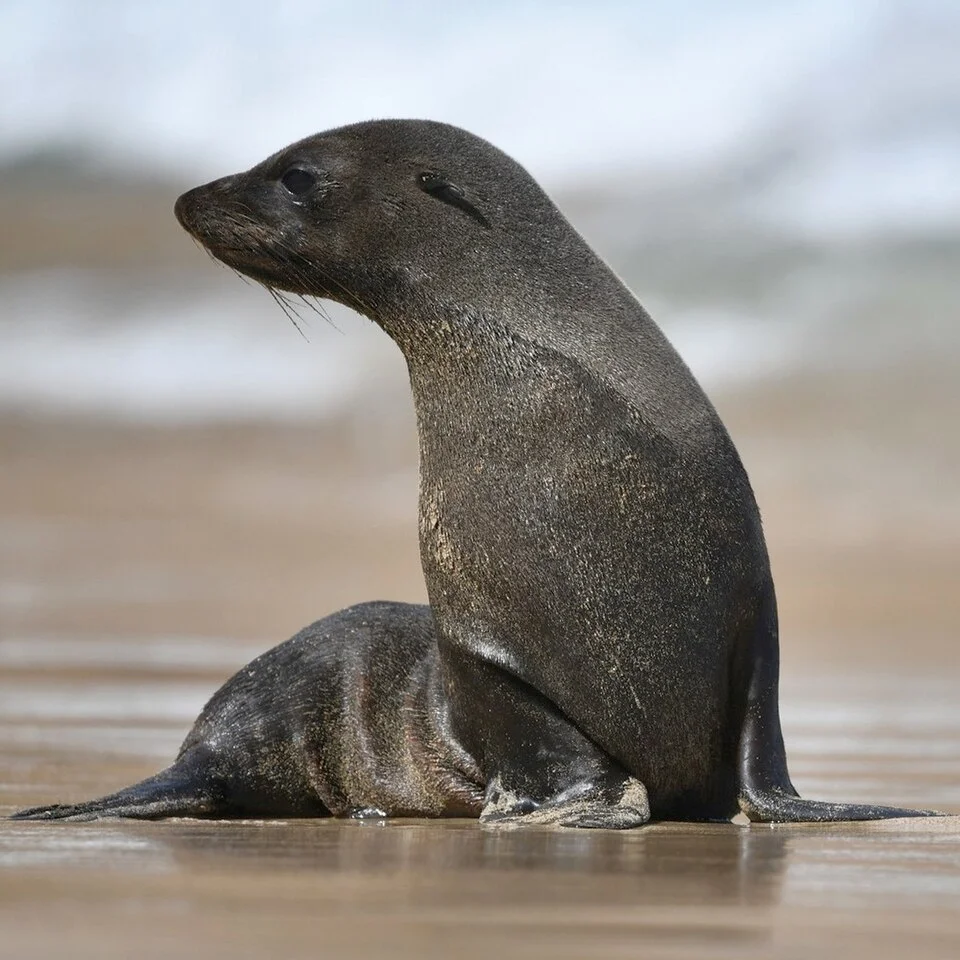
The Juan Fernández fur seal: one of the most remarkable recoveries in the Pacific
Almost extinct in the 19th century from mass fur hunting, the Arctophoca philippii was rediscovered in 1965 with only 200 individuals. Today it grows 16–17% annually, one of the most documented population rebounds in the South Pacific.
The Juan Fernández fur seal (Arctophoca philippii) is the protagonist of one of the most thoroughly documented recovery stories in the South Pacific. This dense-furred, robust pinniped was driven to the brink of extinction in the 19th century, when fur trading fleets hunted it systematically until its population fell so low that science considered it gone.
From collapse to rediscovery
In 1965, a small colony of just 200 individuals was found on the coasts of the archipelago. The discovery surprised the international scientific community: decades of absent records had led to the conclusion that the species had vanished. From that moment, with legal protection enacted by Chile and hunting banned, the colony began recovering at a rate that astonished researchers.
Unprecedented growth
Subsequent studies documented annual growth rates of between 16 and 17% — extraordinary for a marine mammal. Today the population exceeds 12,000 individuals, a 60-fold increase in little more than five decades. Adult males can reach 300 pounds (140 kg) and 2 meters in length, while females are considerably smaller — around 45 kg and 1.4 m. The sexual dimorphism is among the most pronounced of all pinnipeds.
Biology and behavior
Females forage at sea, sometimes up to 500 km from shore, diving to depths of 30 to 90 meters in search of lanternfish and squid, primarily at night when prey rises. Pups are born between November and December with soft black fur that fades to light brown in the first years. Despite the recovery, the species is not without threats: intestinal parasite infestations and heavy metal accumulation in tissues have affected pup populations in recorded episodes.
On Robinson Crusoe's rocky shores, watching these animals rest in groups connects you directly to nature's resilience — a living testament that conservation, when it arrives in time, works.