
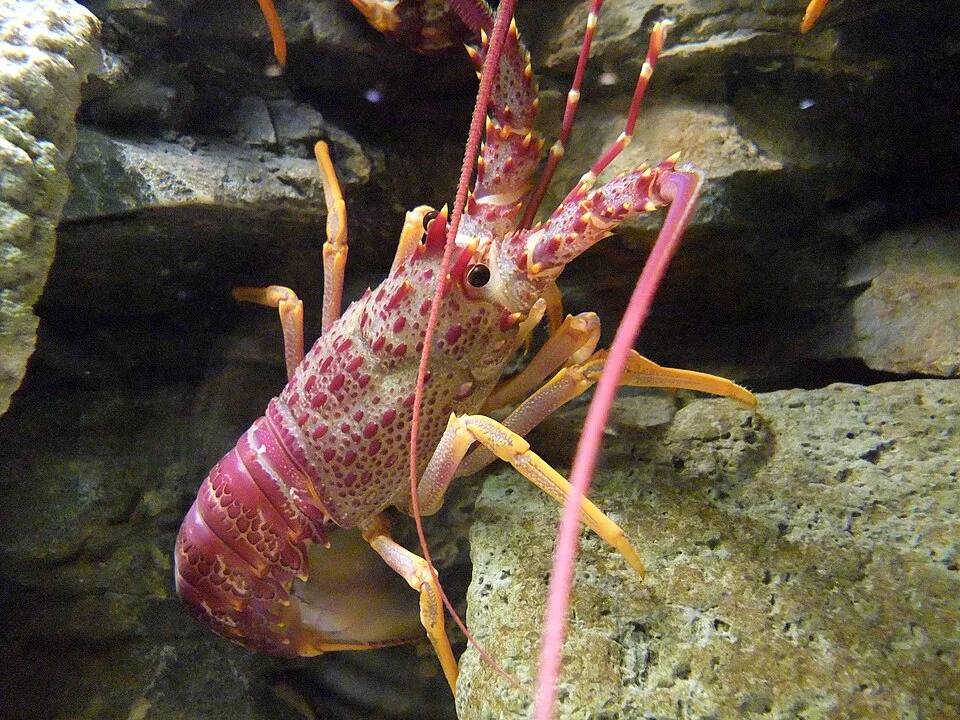
Jasus frontalis: the endemic lobster that sustains the island's economy
The Juan Fernández spiny lobster (clawless) is the most commercially valuable species of the archipelago and the economic base of its 900 inhabitants. The annual closed season and controlled quota are the sustainable fishing model the island defends.
In the marine depths of the Juan Fernández archipelago lives a creature that sustains the entire economy of its 900 inhabitants: the Juan Fernández spiny lobster (Jasus frontalis). Unlike Atlantic lobsters, this South Pacific species lacks claws — its long, spiny antennae are its most distinctive feature — and its meat is considered among the finest in the world.
An exclusively local resource
Jasus frontalis is endemic to the archipelago: it exists only in the waters of Robinson Crusoe, Alejandro Selkirk, and surrounding islets. This restricted geographic range makes it a resource the islanders consider their own, and which they manage with remarkable awareness of its limits. Lobster fishing is practically the only productive activity on the island, creating a natural incentive not to overexploit it.
The sustainable fishing model
The harvest season is regulated by annual closed seasons that allow the species to reproduce. Capture of egg-bearing females and undersized specimens is prohibited. Artisanal fishermen — organized in the Juan Fernández Fishermen's Cooperative — use traps (nasas) placed on the seafloor, a selective method that minimizes bycatch. The product is exported primarily to fine dining markets in Chile, Europe, and Asia.
A fragile balance
Despite the relative sustainability of the model, the lobster faces growing pressures: ocean warming alters reproduction cycles and prey distribution, and tourism creates local demand that competes with exports. Maintaining the balance between the economic well-being of islanders and the health of the lobster population is one of the main governance challenges facing the community.
Eating Juan Fernández lobster is, in a sense, directly supporting the families who for generations have built a responsible relationship with the sea. A luxury with history behind it.