
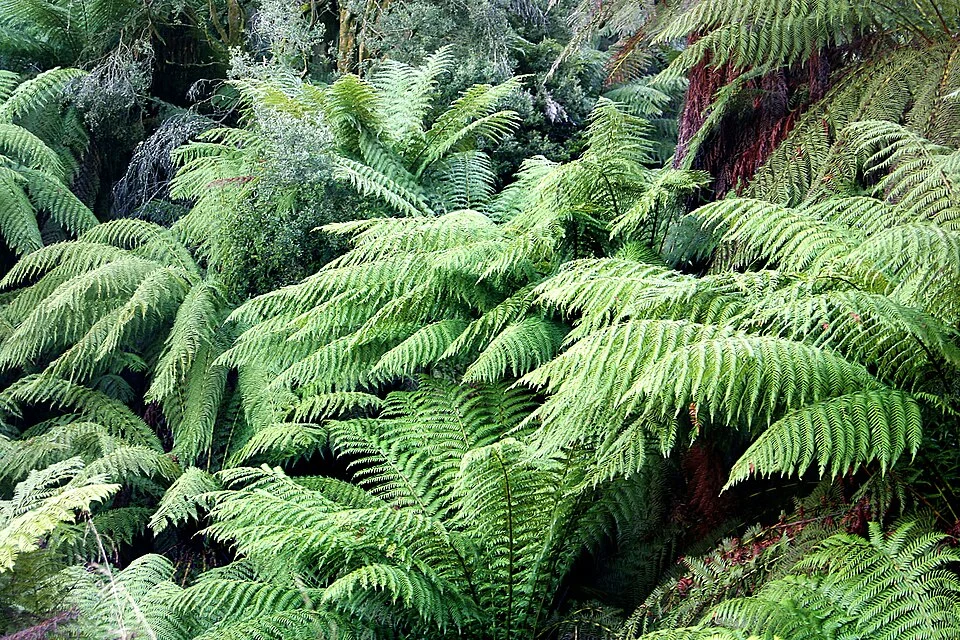
Tree fern forests: the most singular montane ecosystem in the Pacific
At 700–750 meters altitude, Thyrsopteris elegans forms dense forests of prehistoric tree ferns that exist nowhere else in the world. Together with Dicksonia berteroana, they form one of the oldest and most fragile montane ecosystems on the planet.
At around 700 meters altitude on the slopes of Robinson Crusoe, the landscape changes dramatically. The invasive plants that dominate lower elevations lose ground, and a world that seems torn from the Jurassic appears: a dense forest of tree ferns with trunks up to 5 meters tall and enormous fronds filtering light in shades of deep green. It is one of the oldest and most singular ecosystems in the Pacific.
Thyrsopteris elegans: the fern that exists nowhere else
Thyrsopteris elegans is the sole living representative of its family (Thyrsopteridaceae), a lineage of ferns dating back to the Mesozoic era. This tree-fern, reaching up to 4 meters in height, grows exclusively in Juan Fernández, primarily in the high montane zone of Robinson Crusoe Island. Its morphology is so distinct from any other living fern that botanists use it as a reference for understanding the evolution of the group.
Dicksonia berteroana and the highland community
It shares the canopy with Dicksonia berteroana, another endemic tree fern that can exceed 5 meters. Together they create a humid, shaded microclimate where mosses, lichens, miniature orchids and other epiphytes thrive — plants that cannot survive in lower zones. This highland community is also a critical refuge for the Juan Fernández firecrown, which finds in these altitudes the peace and resources that invasive species deny it at lower, more accessible elevations.
An ecosystem under silent pressure
Although the montane zone is relatively less affected by invasive species than the lower parts of the island, it is not without threats. The gradual upward spread of bramble, and the historical introduction of goats and rabbits, have left marks on the understory. Habitat fragmentation and climate change — altering the fog and rain patterns these ecosystems depend on — represent risks that are still not fully understood.
Walking through these tree fern forests is an experience of a different temporal dimension. Being surrounded by plants that existed before dinosaurs ruled the Earth makes any everyday concern lose its scale.